

1. Overview
Quarterly planning is one of the most time-intensive responsibilities for project managers. Gathering inputs, reviewing backlog items, evaluating priorities, and shaping a roadmap requires hours of sorting, filtering, and interpreting tasks across multiple teams. The process often becomes inconsistent and highly dependent on manual judgment, leading to planning delays and misaligned priorities across departments.
To streamline this, I built an AI-powered roadmap generation system that analyzes ClickUp tasks, evaluates them using custom tag-based logic, and produces structured quarterly plans automatically. The system extracts priorities, deadlines, dependencies, team workloads, and business impact—then generates a clean, organized roadmap with minimal PM intervention. This eliminated the bulk of manual roadmap creation work and significantly improved planning accuracy and consistency across teams.
2. Background & Context
3. Problem Statement
4. Tools & Automation Stack
◉ ClickUp (backlog tasks, custom tags, task metadata)
◉ OpenAI API (roadmap analysis + prioritization logic)
◉ Zapier / Make.com (automation workflow)
◉ Slack (delivery of roadmap summary)
5. Automation Flow
1. PM triggers the roadmap generator at quarter-start
2. Automation extracts all ClickUp tasks tagged for roadmap consideration
3. AI analyzes tasks using tag logic and scoring criteria
4. AI generates a structured quarterly roadmap with task groups
5. ClickUp creates a new quarterly folder with tasks organized by priority and team
6. Slack sends the completed roadmap summary to stakeholders
This created a reliable, automated pipeline that transformed backlog items into clear quarterly plans.
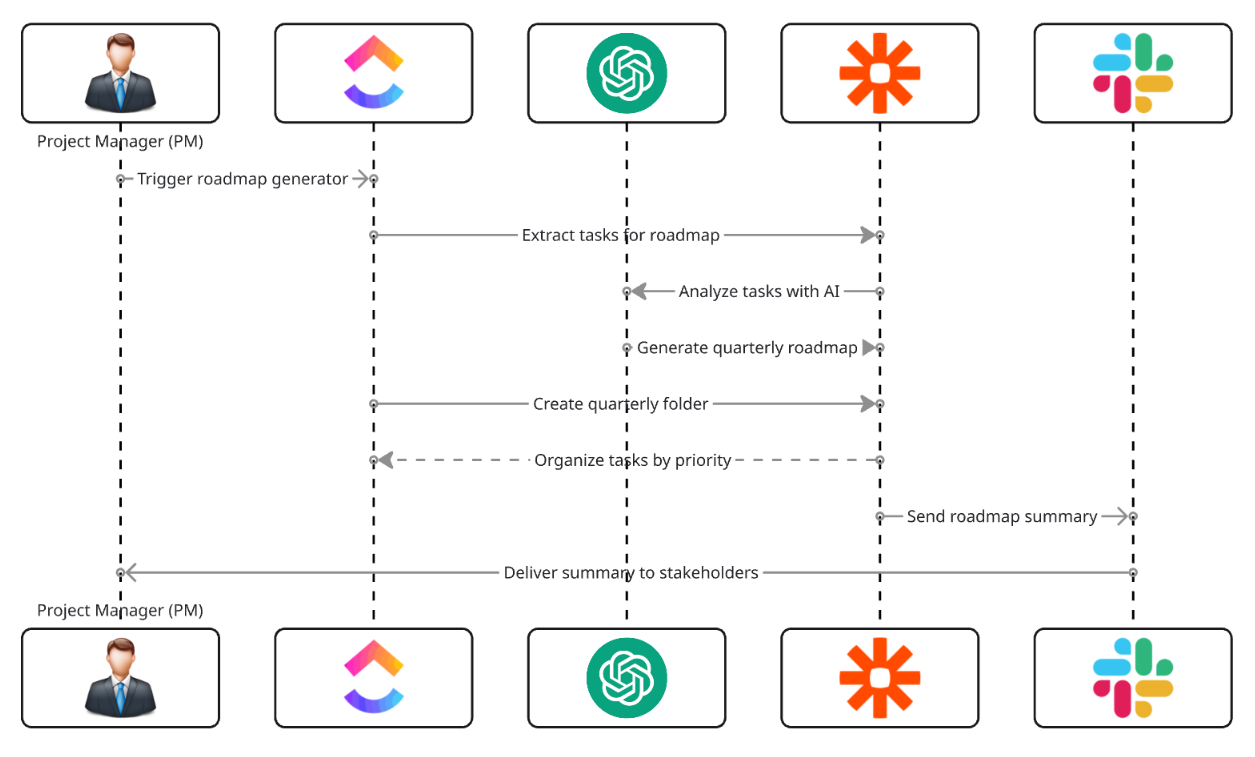
Fig. 1: AI-Powered Quarterly Roadmap Generation from ClickUp Backlog Tasks
6. Implementation Details
6.1 AI Prompt (The Core Logic)
The following prompt powered roadmap generation:
					“Analyze the following ClickUp tasks and generate a quarterly roadmap.
For each task, evaluate: impact, complexity, urgency, team, tags, estimated time,
dependencies, and deadlines. Group tasks into Q1 roadmap sections:
High Priority, Medium Priority, Low Priority.

Tasks: {{task_list}}

Output Requirements:
- Roadmap title for the quarter
- Three priority buckets with tasks:
  - title
  - description
  - assignee
  - priority
  - estimated completion window
  - dependencies
- Provide a summary of overall workload and risks.”
The AI outputs a structured roadmap ready for import.
6.2 Score Mapping (Interpretation Rules)
Tags and metadata guided the roadmap classification:
| Tag / Factor | Meaning | Behavior |
|---|---|---|
| high-impact | Direct business or revenue value | Put in High Priority |
| complex | Requires multi-team collaboration | Mark dependencies |
| quick-win | Low effort, high value | Add to Medium Priority |
| blocked | Depends on external factors | Schedule tentatively |
| strategic | Long-term initiatives | Place early for visibility |
6.3 ClickUp Automations
The ClickUp workspace applied the following rules:
					If task tagged "high-impact" → Move to High Priority list
If task includes dependencies → Add "Dependencies" tag
If task contains "quick-win" → Move to Medium Priority list
If task marked "blocked" → Add to roadmap with status "Pending"
If new roadmap folder created → Auto-assign department leads
This standardized roadmap creation across teams.
6.4 Data Extracted for AI Analysis
The system evaluated:
◉ ClickUp tags (high-impact, quick-win, complex, etc.)
◉ Task descriptions & objectives
◉ Estimated hours or points
◉ Dependencies and blockers
◉ Deadlines or requested timing
◉ Assignee and team
◉ Department workload distribution
This ensured the roadmap was aligned with capacity and business goals.
7. Code-to-Business Breakdown
| Logic / Code | Business Impact |
|---|---|
| Tag-driven filtering | Ensures roadmap only includes relevant tasks |
| Priority scoring | Creates objective, data-driven roadmaps |
| Dependency detection | Prevents mis-sequencing and delays |
| AI grouping | Automatically builds a clean roadmap structure |
| Auto-folder creation | Standardizes quarterly processes |
| Slack summary | Improves visibility and stakeholder alignment |
8. Real-World Brand Scenario: Deployment Under Solution By Ray (SBR)
About Solution By Ray (Operating Environment)
Solution By Ray (SBR) operates as a systems and automation delivery practice focused on building scalable operational frameworks for agencies, product teams, and internal business units. A core part of SBR’s work involves transforming manual, judgment-heavy processes into structured, repeatable systems using automation and AI.
Quarterly planning was a recurring operational challenge across multiple engagements handled under SBR, particularly where teams relied on large, unstructured ClickUp backlogs spanning several departments.
How Quarterly Roadmapping Worked Before the Framework
Before the automation framework was introduced, quarterly roadmapping under SBR relied heavily on manual PM effort.
Typical planning cycles involved:
◉ Reviewing 200–350 backlog tasks per quarter
◉ Manually filtering tasks by department, urgency, and perceived impact
◉ Interpreting inconsistent tags and descriptions
◉ Identifying dependencies through manual inspection
◉ Creating roadmap documents from scratch
◉ Iterating with stakeholders to resolve misalignment
This process consistently required 12–16 hours per quarter and often produced roadmaps that varied in structure and prioritization logic.
Why the Need Became Critical
As SBR scaled the number of teams and engagements supported:
◉ Backlog size increased faster than planning capacity
◉ Roadmaps depended too heavily on individual judgment
◉ Cross-team dependencies were missed or surfaced late
◉ Low-impact tasks frequently displaced higher-value initiatives
◉ Planning cycles became slow, inconsistent, and difficult to repeat
At this stage, quarterly planning became a bottleneck to execution rather than a strategic alignment exercise.
How the Framework Was Implemented in Practice
The automation framework was introduced as a systemized planning layer, not as a change in how teams created tasks.
Key implementation principles included:
◉ Using ClickUp as the single source of truth for backlog data
◉ Enforcing tag-driven prioritization logic instead of subjective ranking
◉ Allowing AI to evaluate impact, urgency, complexity, and dependencies
◉ Generating roadmaps automatically at quarter start with a single trigger
◉ Producing consistent roadmap structures regardless of backlog size
Teams continued managing tasks normally, while the framework handled analysis, grouping, and roadmap creation in the background.
How Execution Changed After Adoption
Once deployed across SBR-managed environments:
◉ Quarterly roadmaps were generated in minutes instead of hours
◉ Task prioritization followed a consistent, objective model
◉ Dependencies were surfaced automatically during planning
◉ PMs focused on reviewing strategy instead of assembling documents
◉ Stakeholder alignment improved due to predictable roadmap structure
Roadmapping shifted from a manual synthesis task to a repeatable system-driven process.
9. Results & Performance Impact
Time Efficiency
◉ 12–14 hours saved per quarter per PM
◉ Roadmaps generated instantly from existing backlog data
Planning Quality
◉ High-impact tasks consistently prioritized
◉ Dependencies identified earlier in the planning cycle
◉ Reduced rework and fewer mid-quarter priority shifts
Team Alignment
◉ All departments followed the same prioritization framework
◉ Clear expectations set at the start of each quarter
◉ Reduced back-and-forth during roadmap reviews
Scalability
◉ Framework applied across multiple teams and engagements
◉ No additional setup required per quarter
◉ Planning scaled without increasing PM workload
10. Challenges & Adjustments During Live Use
Several refinements were made after observing real planning behavior:
◉ Inconsistent tag usage across teams → Introduced tagging standards and periodic audits
◉ Misclassification of long-term initiatives → Refined AI prompts with strategic task examples
◉ Overly large roadmaps due to broad tagging → Added filters to exclude outdated or low-value backlog items
These adjustments improved roadmap clarity without reducing automation benefits.
11. Key Learnings
◉ Roadmapping quality depends heavily on structured metadata
◉ Tag-driven systems outperform subjective prioritization
◉ AI is effective at synthesizing large backlogs into clear plans
◉ Automating planning frees PMs to focus on strategy and execution
◉ Consistency improves stakeholder confidence in roadmaps
12. Conclusion
This case study demonstrates how an automation-driven roadmap generation framework can be implemented under Solution By Ray (SBR) to transform quarterly planning at scale.
By converting large, unstructured ClickUp backlogs into instant, structured quarterly roadmaps, the framework eliminated hours of manual planning, improved prioritization accuracy, and ensured consistent alignment across teams—turning quarterly planning into a predictable, repeatable operational system.
Looking to Automate Your Entire Quarterly Planning Process With One Click?