

1. Overview
Managing Meta Ads performance requires continuous monitoring. A sudden drop in ROAS can burn budget, misallocate spend, or cause campaigns to underperform for hours before someone notices. Previously, the media team manually checked dashboards throughout the day, but high workloads and context-switching made it easy for performance dips to go undetected.
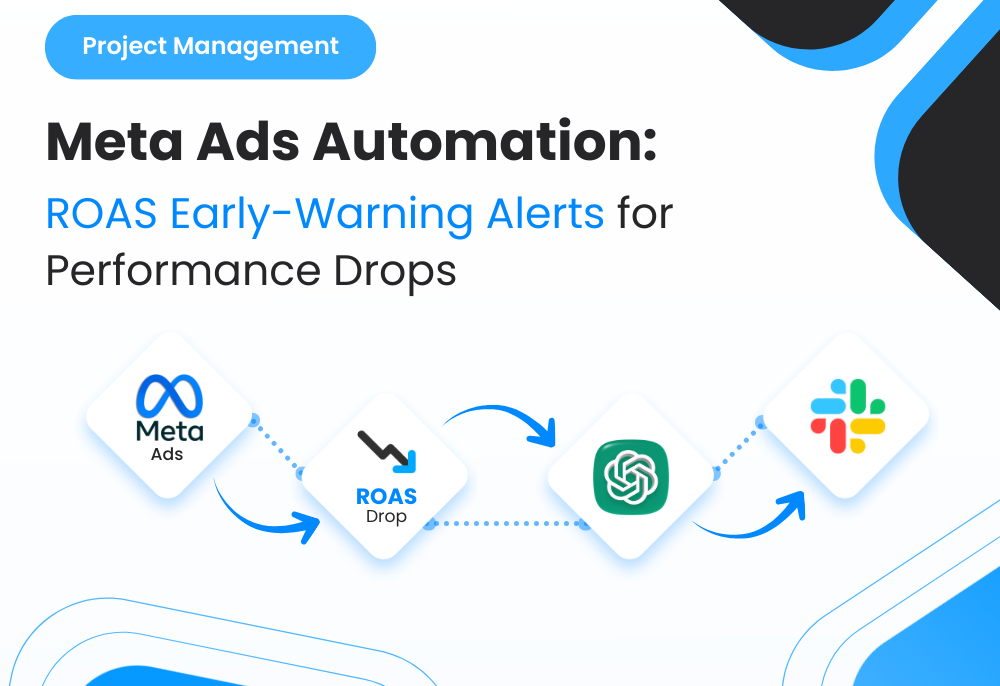
To eliminate these blind spots, I developed an AI-enhanced monitoring system that automatically detects ROAS drops in Meta Ads and sends real-time alerts to Slack. The system runs hourly checks, evaluates trend severity, classifies issues into alert levels, and notifies the team instantly—preventing wasted spend and improving reaction speed across all accounts.
2. Background & Context
The paid media team managed multiple Meta Ads accounts across:
◉ E-commerce
◉ Lead generation
◉ Subscription products
◉ Service-based businesses
Monitoring ROAS required:
◉ Checking Ads Manager multiple times per day
◉ Comparing performance against previous periods
◉ Identifying sudden shifts
◉ Notifying stakeholders
◉ Adjusting budgets or pausing campaigns quickly
This manual approach consumed 1–2 hours daily and often resulted in late detection of performance drops, especially during weekends, holidays, or high-volume campaigns.
3. Problem Statement
Key operational pain points included:
1. Manual ROAS checks were inconsistent and time-intensive
2. Sudden ROAS drops caused unnecessary spend losses
3. No real-time alerting system existed
4. PM/media team sometimes caught issues hours late
5. Lack of a standardized workflow for escalation and correction
6. No predictive or early-warning mechanism
The team needed an automated, reliable, always-on monitoring system that reacted immediately to performance changes.
4. Tools & Automation Stack
◉ Meta Ads API (performance data feed)
◉ Looker Studio / BigQuery (optional: data warehousing)
◉ OpenAI API (severity classification & narrative alert generation)
◉ Zapier / Make.com (automation orchestration)
◉ Slack (real-time alerts and notifications)
◉ ClickUp (optional follow-up task creation)
5. Automation Flow
The system followed this structure:
1. Hourly trigger initiates the monitoring workflow
2. Meta Ads performance data is fetched via API
3. AI evaluates ROAS trends and compares to historical benchmarks
4. AI assigns an alert level (Warning / Critical)
5. Slack posts a formatted alert with campaign details
6. If Critical, follow-up tasks are auto-created in ClickUp
7. PM/media buyer reviews and solves the issue immediately
This created a real-time performance safety net for all campaigns.
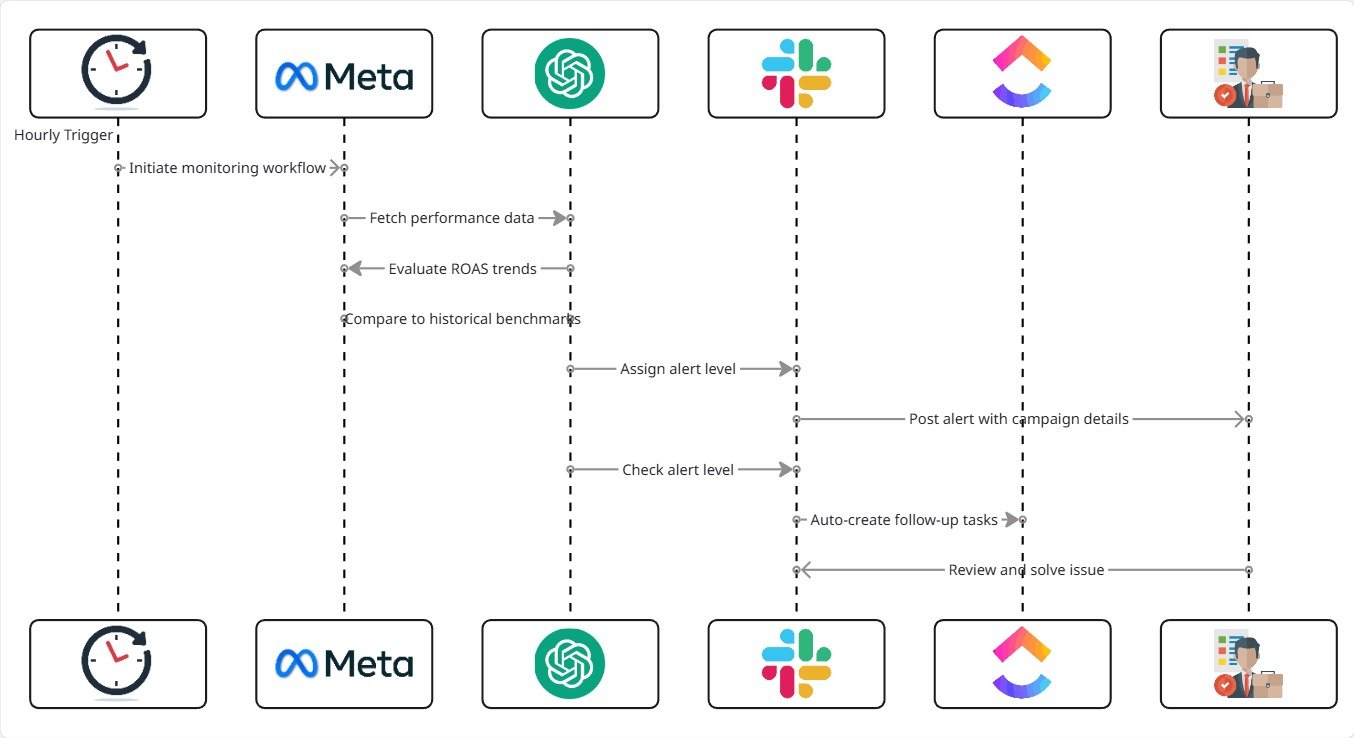
Fig. 3: Automated ROAS Monitoring and Slack Alert System for Meta Ads
6. Implementation Details
6. Implementation Details
The system used a structured prompt to analyze ROAS drops:
					“Evaluate Meta Ads performance using the data below.
Identify whether ROAS has dropped significantly compared to historical values.
Classify the issue as:
- ‘No Issue’
- ‘Warning’ (moderate drop)
- ‘Critical’ (severe drop requiring immediate action)

Data: {{ads_data}}

Output Requirements:
- Alert Level
- Summary of Findings
- ROAS Change Percentage
- Potential Causes (if identifiable)
- Recommended Next Steps”
The AI returns a classification and actionable summary.
6.2 Score Mapping (Interpretation Rules)
The system mapped AI classifications to actions:
| Alert Level | Meaning | Behavior |
|---|---|---|
| No Issue | Normal fluctuations | No alert sent |
| Warning | 10–25% ROAS drop | Soft alert in Slack |
| Critical | 25%+ ROAS drop | Urgent Slack alert + ClickUp task |
This ensured meaningful alerts without noise or false alarms.
6.3 ClickUp Automations
To ensure structured response workflows:
					If Alert = Critical → Create urgent ClickUp task
If Alert = Warning → Notify PM for review
If performance recovers → Auto-close previous alert tasks
If recurring alerts detected → Escalate to senior strategist
If new alert posted → Tag media buyer on duty
This standardized the escalation process across all accounts.
6.4 Data Extracted for AI Analysis
The system evaluated:
◉ ROAS (current hour vs average past 7 days)
◉ CPA and CPC trends
◉ Spend velocity (spend per hour)
◉ Conversion volume changes
◉ Active campaign statuses
◉ Budget shifts and pacing
◉ Audience overlap or fatigue indicators
◉ CTR and frequency fluctuations
This gave the AI enough context to determine severity and root-cause hints.
7. Code-to-Business Breakdown
| Logic / Code | Business Impact |
|---|---|
| ROAS trend comparison | Identifies issues before they become costly |
| Severity classification | Reduces alert noise and false alarms |
| Hourly monitoring | Eliminates manual checks entirely |
| Slack notifications | Increases team reaction speed |
| Auto task creation | Ensures corrective action is tracked |
| Spend-velocity detection | Prevents budget drain during bad performance |
8. Real-World Brand Scenario: Deployment for Cure Medical Supply (Meta Ads)
About Cure Medical Supply (Operating Environment)
Cure Medical Supply operates as a healthcare and medical supplies brand running Meta Ads as a primary acquisition channel. Campaigns are performance-driven, with ROAS closely tied to profitability, inventory movement, and demand consistency across product categories.
Because Meta Ads performance can fluctuate rapidly due to auction pressure, creative fatigue, or tracking issues, even short-lived ROAS drops can lead to unnecessary spend loss if not detected quickly.
How ROAS Monitoring Worked Before the System
Before the early-warning system was introduced, ROAS monitoring relied on manual dashboard checks.
This typically involved:
◉ Media buyers checking Ads Manager multiple times per day
◉ Comparing current ROAS against recent performance
◉ Detecting drops visually rather than systematically
◉ Noticing issues hours after they began
◉ Limited visibility during weekends or off-hours
While this approach worked during low workload periods, it became unreliable as campaign volume and execution pressure increased.
Why the Need Became Critical
As Cure Medical Supply scaled Meta Ads spend:
◉ ROAS drops could burn budget before being noticed
◉ Manual checks became inconsistent under workload pressure
◉ Performance issues during off-hours went undetected
◉ No standardized escalation or response workflow existed
◉ Reaction speed depended on individual availability
At this stage, delayed detection of ROAS drops posed a direct risk to profitability.
How the Early-Warning System Was Implemented in Practice
The ROAS early-warning system was introduced as an always-on monitoring and alerting layer, not as a reporting replacement.
Key implementation principles included:
◉ Hourly automated ROAS monitoring via the Meta Ads API
◉ Comparison against historical benchmarks rather than static thresholds
◉ AI-based severity classification (No Issue / Warning / Critical)
◉ Real-time Slack alerts with clear context and next steps
◉ Automatic ClickUp task creation for critical alerts
The system operated continuously in the background, requiring no manual triggers or dashboard checks.
red no manual configuration beyond API access.How Execution Changed After Adoption
Once deployed for Cure Medical Supply:
◉ ROAS drops were detected within the same hour
◉ Alerts surfaced issues before significant budget loss occurred
◉ Media buyers reacted faster with pausing, budget shifts, or creative changes
◉ PMs and strategists received the same signal simultaneously
◉ Manual dashboard monitoring was no longer required
ROAS protection shifted from reactive inspection to proactive system-driven monitoring.
9. Results Observed for Cure Medical Supply
Time Efficiency
◉ 1–2 hours per day saved by eliminating manual ROAS checks
◉ Reduced context-switching for media buyers
Spend Protection
◉ Faster detection prevented unnecessary spend during dips
◉ ROAS recovery actions occurred 2–4 hours earlier on average
Team Alignment
◉ Slack alerts reached media buyers, PMs, and strategists at the same time
◉ No missed issues during weekends or off-hours
◉ Clear, standardized escalation process
Scalability
◉ All Meta Ads campaigns monitored automatically
◉ New campaigns required no additional configuration
◉ System scaled without added operational workload
10. Challenges & Adjustments During Live Use
Several refinements were made after observing live performance patterns:
◉ API data delays or partial data → Added fallback to recent-hour metrics
◉ Noise from normal ROAS fluctuations → Introduced smoothing logic and minimum deviation thresholds
◉ Occasional severity misclassification → Enhanced AI prompts with campaign benchmarks and metadata
These adjustments improved signal quality without slowing alert delivery.
11. Key Learnings
◉ Real-time ROAS monitoring significantly reduces budget risk
◉ Early-warning systems outperform periodic checks
◉ AI classification reduces false alarms and alert fatigue
◉ Standardized alerts improve response coordination
◉ Automation enables proactive performance management
12. Conclusion
This case study demonstrates how an AI-powered ROAS early-warning system can be implemented for a healthcare e-commerce brand like Cure Medical Supply to protect Meta Ads performance at scale.
By continuously monitoring ROAS, classifying severity in real time, and delivering instant Slack alerts with structured follow-up, the system eliminated manual checks, reduced wasted spend, and improved reaction speed—transforming ROAS monitoring from a reactive task into a proactive performance safeguard.
Want Your PPC Performance Delivered to Slack Automatically Every Day?