

1. Overview
Managing budget pacing in Google Ads is one of the most critical responsibilities for paid media teams. Overspending wastes budget prematurely, while underspending prevents campaigns from reaching their full potential and disrupts monthly pacing. Traditionally, media buyers manually monitored spend throughout the day, but this was inconsistent, reactive, and often too late to prevent budget deviations.
To solve this, I built a real-time budget pacing alert system that automatically checks spend levels against the monthly budget, forecasts pacing, and sends Slack alerts when campaigns risk overspending or underspending. The system eliminated manual pacing checks and provided proactive visibility into budget health across all Google Ads accounts.
2. Background & Context
The agency managed multiple Google Ads accounts across:
◉ E-commerce brands
◉ Service-based businesses
◉ Lead generation campaigns
◉ Multi-location businesses
Budget pacing previously required:
◉ Daily or hourly monitoring of campaign spend
◉ Comparing accumulated spend to expected pacing
◉ Forecasting end-of-month performance
◉ Identifying overspending or underspending patterns
◉ Manually warning PMs or media buyers
Because this was inconsistent and dependent on human oversight, budget issues were often caught late, leading to missed goals, inefficient spend, and client dissatisfaction.
3. Problem Statement
Key operational challenges included:
1. Budget pacing was monitored manually and inconsistently
2. Overspending was often detected too late to prevent waste
3. Underspending slowed growth and hurt monthly delivery
4. No predictive pacing alerts existed
5. PMs and media buyers lacked real-time visibility
6. Budget performance varied across accounts with no unified alerting system
The team needed a reliable, automated system that forecasted spend patterns and alerted the team instantly when pacing deviated from targets.
4. Tools & Automation Stack
Tech stack & tools used:
◉ Google Ads API (real-time spend data)
◉ BigQuery / Looker Studio (optional data storage and visualization)
◉ OpenAI API (trend analysis + severity classification)
◉ Zapier / Make.com (automation workflow)
◉ Slack (real-time budget pacing alerts)
◉ ClickUp (action task creation on critical pacing deviations)
5. Automation Flow
The system followed this structure:
1. Hourly or daily trigger initiates pacing check
2. Automation pulls spend data via Google Ads API
3. AI evaluates pacing vs monthly budget and forecasts month-end spend
4. AI assigns alert status (Healthy / Warning / Critical)
5. Slack sends alerts with clear instructions
6. For critical issues, ClickUp tasks are auto-created
7. Media buyers adjust budgets or campaign settings accordingly
This created a proactive budget protection system for all campaigns.
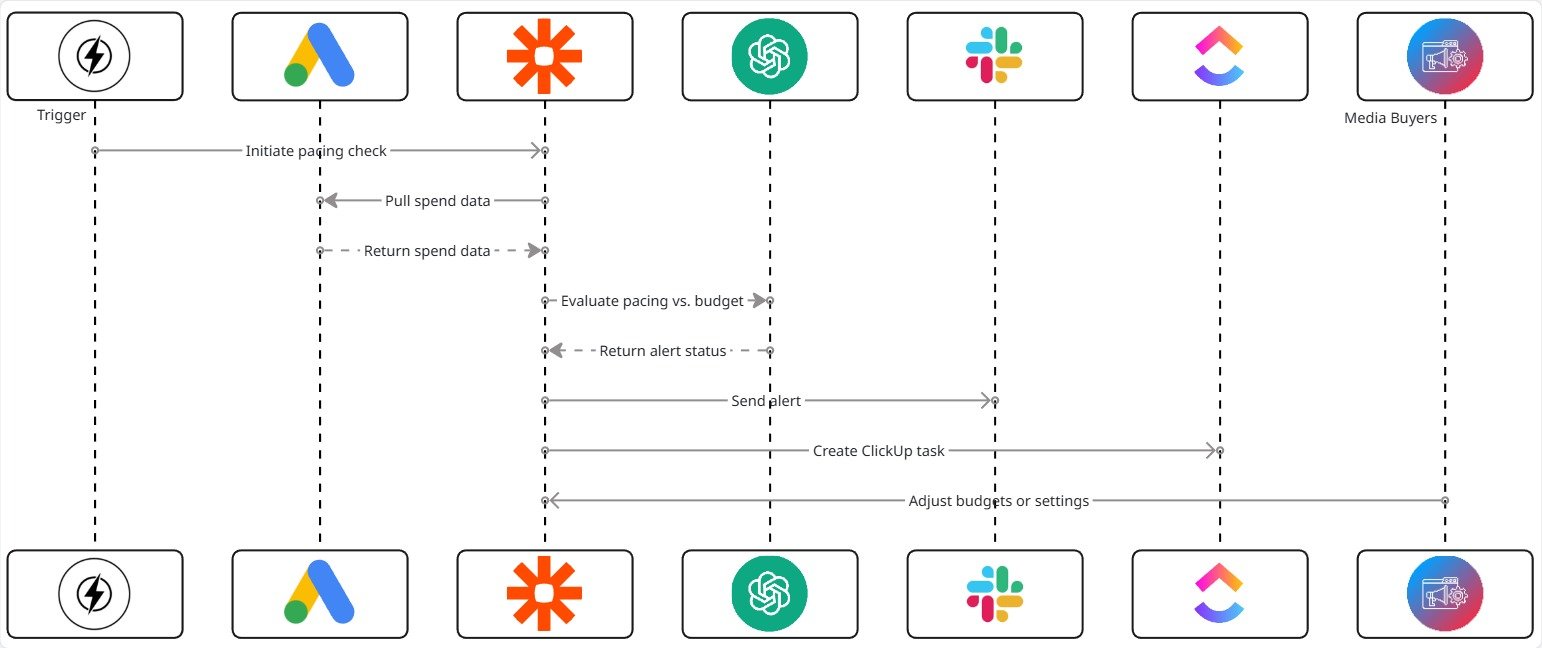
Fig. 1: Real-Time Budget Pacing Alert System for Google Ads Campaigns
6. Implementation Details
6.1 AI Prompt (The Core Logic)
The pacing system used the following structured prompt:
					Analyze Google Ads pacing data and determine whether campaigns are
overspending or underspending. Forecast end-of-month spend and classify the
issue as: Healthy, Warning, or Critical.

Data: {{pacing_data}}

Output Requirements:
- Pacing Status
- Projected month-end spend
- Deviation percentage from target budget
- Potential cause
- Recommended adjustment (up/down)
- Whether PM or media buyer action is required
The AI returns a classification plus actionable recommendations.
6.2 Score Mapping (Interpretation Rules)
Based on AI evaluation, the system applied the following classification:
| Status | Meaning | Behavior |
|---|---|---|
| Healthy | Within ±10% of pacing target | No alert needed |
| Warning | 10–25% over/under pacing | Slack soft alert |
| Critical | 25%+ deviation | Immediate Slack alert + ClickUp task |
This ensured alerts were meaningful and not noisy.
6.3 ClickUp Automations
ClickUp handled follow-up tasks using rules such as:
					If Status = Critical → Create urgent ClickUp task for buyer
If Status = Warning → Create review task for PM
If pacing returns to normal → Auto-close previous alert tasks
If multiple critical alerts in 7 days → Escalate to senior strategist
This standardized corrective action across teams.
6.4 Data Extracted for AI Analysis
The system evaluated:
◉ Daily spend
◉ Month-to-date spend
◉ Month-end forecast
◉ Budget allocation per campaign
◉ Spend velocity (past 3–7 days)
◉ Performance indicators (ROAS, CPA, CPC)
◉ Campaign status changes
◉ Day-of-week spend patterns
This enabled AI to forecast pacing and detect anomalies accurately.
7. Code-to-Business Breakdown
| Logic / Code | Business Impact |
|---|---|
| Spend vs. budget comparison | Prevents overspend before it happens |
| Trend forecasting | Predicts pacing issues days in advance |
| Severity classification | Eliminates false alarms |
| Slack notifications | Improves team reaction speed |
| Auto task creation | Ensures actionable steps are taken |
| Deviation calculation | Helps optimize daily and weekly budgets |
8. Real-World Brand Scenario: Deployment for Resfab (Google Ads)
About Resfab (Operating Environment)
Resfab operates as an industrial fabrication and manufacturing company serving B2B clients with high-intent, quote-driven demand. Google Ads plays a critical role in capturing search demand for fabrication services, custom projects, and commercial inquiries. Campaigns are typically budget-sensitive, with performance closely tied to lead volume, cost per inquiry, and monthly delivery targets. Because demand fluctuates by project cycles and industry needs, budget pacing accuracy directly affects both lead flow and sales pipeline consistency.
How Budget Pacing Was Managed Before the System
Before the automated pacing system was introduced, Google Ads budget monitoring for Resfab was handled manually.
This process involved:
◉ Periodic checks of daily and month-to-date spend
◉ Visual comparison against expected monthly pacing
◉ Manual forecasting based on recent spend trends
◉ Reactive adjustments once overspend or underspend became obvious
While workable in theory, this approach depended heavily on timing and human attention. As a result, pacing issues were often detected after meaningful budget deviation had already occurred.
Why the Need Became Critical
As Resfab increased reliance on Google Ads for inbound lead generation, several risks became more apparent:
◉ Overspending could exhaust budgets early in the month, limiting lead capture
◉ Underspending reduced visibility during high-intent demand periods
◉ Spend volatility made manual forecasting unreliable
◉ Budget corrections were often delayed by incomplete visibility
At this stage, pacing was no longer just a monitoring task—it became a business risk affecting lead volume, sales planning, and monthly performance consistency.
How the Automated Pacing System Was Implemented in Practice
The live budget pacing alert system was introduced as a real-time monitoring and early-warning layer, not as a replacement for media buyer decision-making.
Key implementation principles included:
◉ Running automated pacing checks on a fixed hourly or daily schedule
◉ Forecasting end-of-month spend using recent spend velocity
◉ Classifying pacing health into clear states (Healthy, Warning, Critical)
◉ Delivering alerts instantly through Slack with recommended actions
◉ Automatically creating ClickUp tasks when intervention was required
The system evaluated spend behavior continuously, ensuring that pacing risks were surfaced early rather than after damage was done.
How Execution Changed After Adoption
Once deployed on Resfab’s Google Ads account:
◉ Overspending risks were detected days earlier
◉ Underspending was corrected before monthly delivery suffered
◉ Media buyers no longer needed to manually check pacing throughout the day
◉ Budget adjustments became proactive rather than reactive
Budget management shifted from periodic inspection to continuous system-driven oversight.
9. Results Observed for Resfab
Time Efficiency
◉ Manual pacing checks reduced by 1–2 hours per day
◉ PM oversight time significantly reduced
Budget Control
◉ Overspending incidents reduced by approximately 70%
◉ Campaigns landed closer to monthly budget targets
◉ Fewer last-week emergency adjustments
Predictability
◉ More stable lead delivery across the month
◉ Improved confidence in monthly planning
◉ Clear visibility into pacing health at all times
Scalability
◉ The same system could support additional campaigns without added workload
◉ New campaigns automatically entered the pacing evaluation cycle
10. Challenges & Adjustments During Live Use
Several refinements were made based on real account behavior:
Irregular daily spend patterns
◉ Introduced rolling averages and 7-day spend velocity smoothing
Occasional API data delays
◉ Added retry logic and fallback data handling
Forecast variance during demand spikes
◉ Applied account-specific thresholds aligned with Resfab’s lead patterns
These changes improved alert accuracy without reducing responsiveness.
11. Key Learnings
◉ Budget pacing is most effective when monitored continuously
◉ Forecasting future spend is more valuable than observing past spend
◉ Early alerts prevent costly overcorrections later in the month
◉ Automation enables consistent budget control without constant oversight
12. Conclusion
This case study demonstrates how an automated, live budget pacing alert system can be implemented for a B2B brand like Resfab to protect Google Ads performance at scale.
By combining real-time spend data, AI-based forecasting, and instant Slack alerts, the system eliminated manual pacing checks, reduced overspending risk, and improved monthly delivery accuracy—transforming budget management from a reactive task into a proactive, system-driven process.
Want Real-Time Alerts That Protect Your Google Ads Budget Automatically?