

1. Overview
Weekly performance reporting is one of the most repetitive and time-consuming tasks for project managers. Generating reports from multiple platforms—ads dashboards, CRM systems, email metrics, creative outputs, deliverables, and task statuses—requires careful consolidation and manual formatting before sharing updates with clients and internal teams. This process often consumes hours every week, leaving PMs with less time for strategy and oversight.
To solve this, I built an AI-powered reporting engine that automatically collects weekly data, analyzes performance trends, formats insights, and delivers a complete, client-ready report. The system eliminates manual report creation entirely, produces consistent outputs, and gives PMs the ability to scale their workload without sacrificing quality or visibility.
2. Background & Context
The agency managed multi-channel reporting across:
◉ Meta and Google Ads
◉ Email marketing platforms
◉ Website analytics
◉ Creative pipelines
◉ Content calendars
◉ ClickUp production timelines
Before automation, weekly reporting required the project manager to:
◉ Log into multiple platforms
◉ Pull metrics manually
◉ Identify wins and gaps
◉ Summarize performance
◉ Write narrative insights
◉ Create next-week action items
◉ Format the report consistently
This consumed 3–5 hours per client each week, adding up to more than 15 hours weekly across all accounts.
3. Problem Statement
1. Weekly reporting was slow and highly manual
2. Reports varied in clarity depending on who prepared them
3. PM workload limits restricted client capacity
4. Insights were sometimes incomplete due to rushed analysis
5. No standardized narrative or recommendation format
6. Significant time lost switching between platforms
The team needed a fast, consistent, automated reporting framework that produced high-quality weekly reports without manual effort.
4. Tools & Automation Stack
◉ Google Ads / Meta Ads API (performance data)
◉ Email platforms (Klaviyo / Mailchimp / HubSpot)
◉ Google Analytics / GA4 (web insights)
◉ OpenAI API (analysis, narrative writing, insight generation)
◉ Zapier / Make.com (workflow automation)
◉ Slack (report delivery and alerts)
◉ ClickUp (task logging and follow-up creation)
5. Automation Flow
The system followed this structure:
1. Weekly trigger initiates the reporting workflow
2. Data is extracted from marketing, analytics, and project platforms
3. AI analyzes the raw data, identifies patterns, and generates insights
4. AI formats a structured weekly performance report
5. Slack delivers the completed report to the team or client
6. ClickUp automatically creates next-week action items based on the insights
This created a fully automated reporting pipeline that operated with zero manual touch.
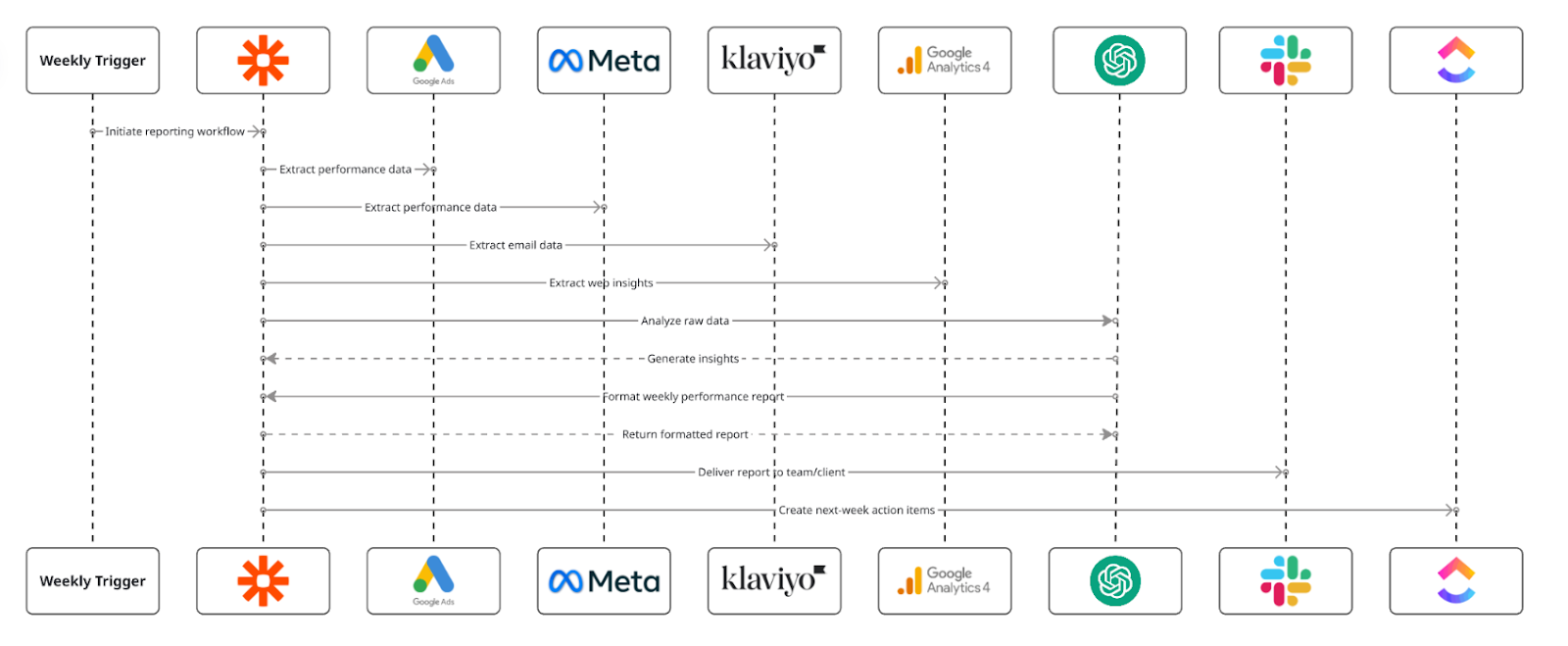
Fig. 1: End-to-End Weekly Performance Reporting Automation for Project Managers
6. Implementation Details
6.1 AI Prompt (The Core Logic)
The AI summarization and analysis engine used the following structured prompt:
					“Analyze the following weekly performance data and generate a complete report.
Identify: wins, losses, trends, efficiency metrics, anomalies, and opportunities.
Provide a narrative summary plus a list of recommendations and next steps.

Data: {{weekly_data}}

Output Requirements:
- Performance Summary
- Channel-by-Channel Insights
- KPI Changes (Week-over-Week)
- Notable Improvements or Declines
- Risks or Red Flags
- Recommended Actions for Next Week
- Items That Need Team or Client Attention
Use clear, concise language suitable for weekly reporting.”
The AI returns a fully formatted report.
6.2 Score Mapping (Interpretation Rules)
Instead of task scoring, the system used performance-level classification:
| Category | Meaning | Behavior |
|---|---|---|
| Strong Performance | KPIs exceed goals | Highlight wins and expand strategy |
| Neutral Performance | KPIs stable | Recommend optimizations |
| Weak Performance | KPIs drop | Flag issues and create follow-up tasks |
| Critical Issues | Major drops or system errors | Immediate Slack alert and PM review |
6.2 Score Mapping (Interpretation Rules)
ClickUp automations handled follow-up actions:
					If AI flags “Critical Issues” → Create urgent ClickUp task for PM
If report contains “Next Steps” → Auto-create tasks in roadmap
If KPIs decline → Add task to review campaign strategy
If opportunities listed → Assign tasks to channel owners
If weekly report posted → PM notified for final review
This ensured data-driven execution directly from the report.
6.4 Data Extracted for AI Reporting
The system pulled:
◉ Ad spend, CPC, CPM, CTR, ROAS
◉ Conversion volume and cost
◉ Email revenue, open rates, click rates, AOV
◉ Website traffic, session sources, engagement metrics
◉ Creative outputs completed in ClickUp
◉ Task completion velocity
◉ Lead quality indicators
This gave AI a complete view of weekly performance.
7. Code-to-Business Breakdown
| Logic / Code | Business Impact |
|---|---|
| Automated data extraction | Removes manual platform switching |
| AI analysis | Produces consistent, objective reporting |
| KPI interpretation | Identifies trends PMs may overlook |
| Narrative generation | Creates client-ready reports instantly |
| Follow-up task automation | Ensures insights convert to execution |
| Slack delivery | Centralizes visibility for team and client |
8. Results & Performance Impact
1. Time Saved
◉ PM saved 3–5 hours weekly per client
◉ Reports generated in minutes instead of half-days
◉ PM capacity increased by 40–60% for strategic work
2. Reporting Quality Improved
◉ Reports became standardized across all clients
◉ Insights were more accurate and comprehensive
◉ AI reduced human bias in interpreting KPIs
3. Faster Alignment
◉ Teams received weekly reports at the same time every week
◉ No delays caused by manual preparation
◉ Stakeholders acted on insights immediately
4. Scalability
The system supported unlimited clients with no added PM workload. A single PM could now manage reporting for 10–15 clients effortlessly.
9. Challenges & How They Were Solved
Challenge: Some APIs returned incomplete or delayed data
Solution: Added fallback sources and error-handling logic
Challenge: AI sometimes lacked context for industry nuances
Solution: Included historical data and account metadata in prompts
Challenge: Recommendation lists were occasionally too long
Solution: Added prioritization logic to summarize top three actions
10. Lessons for Project Managers
◉ Reporting is one of the easiest and most impactful workflows to automate
◉ AI produces highly consistent insights that improve decision-making
◉ Standardizing weekly reporting strengthens communication with clients
◉ PMs can drastically expand capacity when routine tasks are automated
◉ Operational visibility improves when reports are consistent, data-driven, and timely
11. Conclusion
By integrating AI analysis with automated data extraction and structured report delivery, weekly reporting transformed from a repetitive manual task into a fully automated system. The process became faster, more accurate, and more scalable—allowing the PM to manage more clients, reduce workload, and drive higher-quality decision-making across the organization.
This case study demonstrates how AI-powered reporting automation can significantly strengthen project operations and elevate a PM from administrative execution to strategic leadership.
Looking to Automate Your Entire Quarterly Planning Process With One Click?